Monday, 16 April 2012

My Gantt Chart!

METHODOLOGY (2)

CONTENT:                                                                                                                                                                                                                 
SEMESTER 1

 
SEMESTER 2


OBJECTIVE:


1.) To make sure that my task were complete due to the schedule
2.) To be more discipline and responsibility 
3.) To make sure that my project not have any problems


Tuesday, 10 April 2012

WEEK 12: PRE - PRESENTATION FYP 1 with supervisor


CONTENT:

            Do the pre-presentation FYP 1 with supervisor before the real one presentation that will be held on 12 April 2012 (Thursday) at Gemilang Hall....

OBJECTIVE:

            From that I had learnt how to present very well, be confident and positive thinking. And also do more preparation during the big day!

Monday, 2 April 2012

Preparing for the FYP 1 PRESENTATION !!


       Things I need to do as a preparation for the FYP 1 PRESENTATION :


 1.)   Prepare the very complete slide such as have to include the Introduction,Aim and Objective, Problem
Statement, Literature Review, Methodology (block diagram), and the last one is Conclusion and also   References.


2.)   Practice to explain very clearly and can be understand.


3.)   The very important is try to get the highest mark!!! good luck to all :)

Friday, 30 March 2012

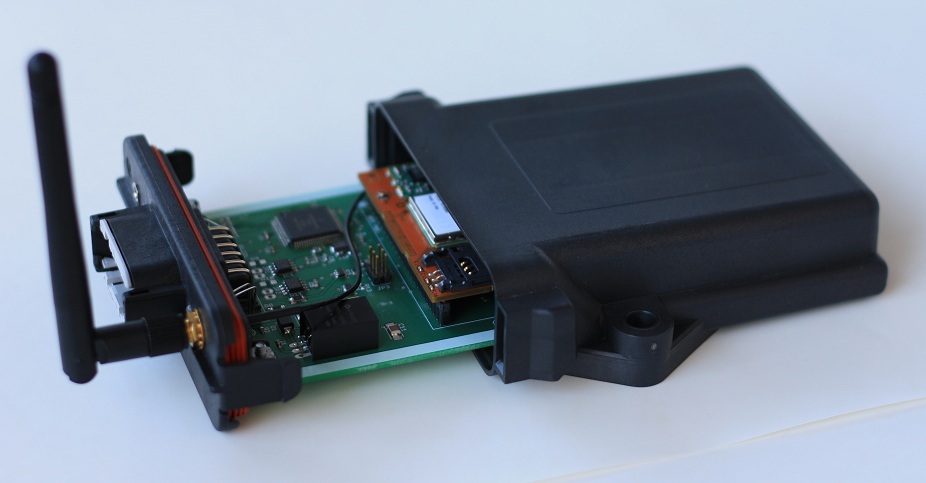
What is the GSM module???


CONTENT:

I have consulted with sir Razif, lecturer from Telecommunication section. he has explain to me how does GSM works. And I completely understand it...

then he ask me to refer to this link http://www.myduino.com to survey how much GSM module n the functionality.


                                                                     GSM MODULE


OBJECTIVE:

1.) To know more about GSM system  and where to buy it
2.) To know whats important part to be consider in election of GSM module

Monday, 26 March 2012

Slide Presentation ~~~

For this week I have to preparing for the slide presentation and need to show it to my lovely supervisor Miss Nurul Fazlin Roslan.... :))


Monday, 12 March 2012

Title : What is the 8051 Microcontroller???

CHAPTER 2 : LITERATURE REVIEW(2)

CONTENT:

:---- Muhammad Ali Mazidi said :

  • In 1981, Intel Corporation introduced an 8-bit microcontroller called the 8051. 
  • This microcontroller had 128 bytes of RAM, 4K bytes of on-chip ROM, two timers, one serial port, and four ports (each 8-bits wide) all on a single chip. At the time it was also referred to as a “system on chip”.
  •  The 8051 is an 8-bit processor, meaning that the CPU can work only 8-bits of data at a time. Data larger than 8 bits has to be broken into 8-bit pieces to be processed by the CPU. The 8051 has a total of four I/O ports, each 8 bits wide. 
  • The 8051 became widely popular after Intel allowed other manufacturers to make and market any flavors of the 8051 they please with the condition that they remain code-compatible with the 8051. This has led to many versions of the 8051 with different speeds and amounts of on-chip ROM marketed by more than half a dozen manufactures. 
  • The 8051 is the original member of the 8051 family. Intel refers to it as MCS-51. There are two other members in the 8051 microcontroller. They are the 8052 and 8031.


REFERENCES:

 [Muhammad Ali Mazidi is the author of The 8051 Microcontroller and Embedded Systems book]

Tuesday, 6 March 2012

RESEARCH - how the GSM works!

CHAPTER 2 : LITERATURE REVIEW(1)

CONTENT:

GSM is a TDMA based wireless network technology developed in Europe that is used throughout most of the world. GSM phones make use of a SIM card to identify the user's account. The use of the SIM card allows GSM network users to quickly move their phone number from one GSM phone to another by simply moving the SIM card. Currently GSM networks operate on the the 850MHz, 900MHz, 1800MHz, and 1900MHz frequency bands. Devices that support all four bands are called quad-band, with those that support 3 or 2 bands called tri-band and dual-band, respectively. In the United States, Cingular operates on the 850 and 1900MHz bands, while T-Mobile operates only on the 1900MHz band.

     Also known as: "Global System for Mobile Communications" & "Group Special  Mobile"